Where to Buy a Reliable Used HOWO Concrete Mixer Truck for Concrete Suppliers?
A reliable used HOWO concrete mixer truck is best purchased from an established Chinese supplier that can prove the truck’s identity, refurbishment work, mixer-system condition, and pre-shipment testing. For most concrete suppliers, a 6x4 8–10m³ HOWO with verified drum, hydraulic, reducer, chassis, and inspection records is the practical starting point.
1. Where Should Concrete Suppliers Buy a Reliable Used HOWO Concrete Mixer Truck?
Concrete suppliers should buy from a supplier that can control vehicle selection, refurbishment, inspection, documentation, and export preparation for the same identifiable truck.
A low quotation and finished photos are not enough. Before paying a deposit, ask for the chassis number, engine specification, original-condition photos, workshop records, drum test videos, and final inspection evidence. Those records should stay connected to the exact vehicle from initial selection through shipment.
This matters more for mixers than ordinary cargo trucks because the buyer is purchasing two working systems at once: the HOWO chassis and the concrete-mixing system.
Current used HOWO concrete mixer trucks can be compared by drive type, drum capacity, steering position, and mixer configuration.
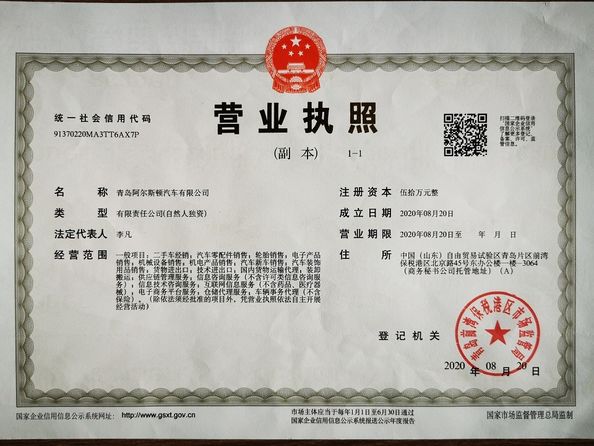
2. How Can You Verify That a Used HOWO Mixer Supplier Is a Real Exporter and Refurbishment Company?
A reliable supplier should be able to prove both who it is and what work it actually performs on the trucks it sells.
Match the legal company name across the quotation, proforma invoice, bank beneficiary details, website, and export documents. Then verify the physical operation through workshop photos, live video, trucks undergoing repair, inspection equipment, and staff performing mechanical work.
A useful test is simple: ask the supplier to show one vehicle before refurbishment, during workshop work, and after final testing. A genuine process is easier to document than a vehicle that has only been cleaned and repainted.
For company background, workshop support, export services, and vehicle preparation, review Qingdao Alston Motors' refurbishment and export experience.
3. What Mixer Capacity and HOWO Chassis Configuration Best Match Your Concrete Delivery Routes?
For many ready-mix suppliers, a 6x4 HOWO with an 8–10m³ drum provides the best balance of delivery volume, maneuverability, axle load, and operating cost.
Capacity should follow the real delivery cycle. A truck serving urban housing or commercial projects may spend more time turning, queuing, and entering restricted sites than driving on open roads. In that environment, a larger drum can reduce flexibility rather than improve productivity.
| Application |
Practical Configuration |
Buyer Reason |
| Tight urban sites |
8m³, 6x4 |
Better turning and site access |
| Standard ready-mix delivery |
10m³, 6x4 |
Strong balance of capacity and cost |
| Higher-volume routes |
12m³, 6x4/8x4 |
More concrete per trip |
| Large open projects |
14–16m³, 8x4 |
Suitable where roads and axle limits permit |
Used HOWO 6x4 mixers commonly appear with engines in roughly the 336–380HP range, while larger trucks may use higher power. The correct choice depends on gradients, road condition, batching-plant distance, local axle limits, and unloading frequency—not horsepower alone.
For deeper capacity and price comparison, use the HOWO mixer capacity and price guide rather than repeating those calculations on this page.
4. What Should You Inspect Inside the Mixer Drum, Blades, Chutes, and Discharge System Before Buying?
The drum interior should be inspected before purchase because worn blades and hardened concrete can reduce effective capacity and mixing performance even when the exterior looks newly refurbished.
Inspect the shell, spiral blades, drum mouth, hopper, chute, roller track, previous welding, and hardened-concrete buildup. Heavy residue creates dead weight and can also hide wear underneath.
NRMCA's truck-mixer inspection guidance provides a useful measurable benchmark: a blade is considered excessively worn when its height at the specified inspection point falls below 90% of its original radial height. The same guidance requires charging and discharge openings and the chute to remain in satisfactory condition.
NRMCA also states that the manufacturer's recommended mixing speed should fall between 4 and 22 rpm, giving buyers a useful reference when checking whether the drum can operate through an appropriate speed range.
5. How Do You Check the Hydraulic Pump, Motor, Reducer, and Drum Rotation System?
The hydraulic system should complete forward rotation, reverse discharge, and speed changes after warm-up without heavy leakage, abnormal vibration, overheating, or reducer noise.
A short yard demonstration is not enough. Run the drum through different speeds and, where practical, continue the test for about 15–20 minutes so the hydraulic oil reaches normal working temperature. Inspect the pump, motor, reducer, hoses, joints, PTO operation, and support rollers during the test.
A reducer that sounds normal when cold may become noisy after warming. Likewise, weak pumps or worn seals may show slower response and leakage only after continuous operation.
Existing HOWO mixer inspection guidance on the site also recommends testing forward rotation, reverse discharge, speed adjustment, leakage, temperature, and reducer response rather than judging components by brand name alone.
YouTube video to embed here:
Used HOWO Concrete Mixer Drum Rotation Test – HOWO TX 8x4 14–16m³ LHD
6. What Engine, Gearbox, Frame, Brakes, Tires, and Suspension Should Be Checked on the Used Chassis?
A mixer truck should pass a full chassis inspection independently of the drum because a good mixer body cannot compensate for an unreliable powertrain or braking system.
Start with a cold engine and inspect starting behavior, smoke, blow-by, coolant condition, leakage, gearbox shifting, clutch response, differential noise, steering play, frame rails, spring brackets, brake-air system, and tire sidewalls.
For export preparation, practical screening references can include the following:
| Inspection Item |
Practical Check |
| Engine compression |
Around 26–28 bar or higher |
| Hot-idle oil pressure |
At least 0.2 MPa |
| Tire tread |
Around 8 mm or more |
| Gearbox |
Clean forward and reverse engagement |
| Frame |
No serious cracks or unsafe structural repairs |
| Brakes |
Stable air pressure and straight response |
| Suspension |
Springs, bushes and U-bolts secure |
Concrete creates a concentrated, constantly moving load. Rear suspension, brakes, tires, drum support structure, and frame mounting areas therefore deserve more attention than cab cosmetics.
7. How Can You Tell Whether the Mixer Truck Was Properly Refurbished Instead of Simply Repainted?
Proper refurbishment leaves a traceable record of mechanical and structural work; repainting only changes appearance.
The evidence should distinguish between components that were inspected, serviced, repaired, rebuilt, and replaced. Those terms should never be treated as interchangeable.
For a concrete mixer, the record should cover the engine, gearbox, brakes, chassis, tires, electrical system, drum, blades, rollers, PTO, hydraulic hoses, pump, motor, reducer, water system, hopper, and chute.
Qingdao Alston Motors uses a buyer-side rule that fits this application well: a refurbishment claim is strongest when the same vehicle can be traced from original condition through workshop intervention to final functional testing. That approach also prevents finished paintwork from becoming the main evidence of quality.
For a detailed evidence list, see HOWO refurbishment records buyers should request.
8. What Pre-Shipment Inspection Evidence, Spare Parts, Warranty Terms, and After-Sales Support Should Be Included?
Before final payment, the buyer should receive vehicle-specific evidence proving that the agreed truck and its mixer system have passed the required tests.
A practical file should include a cold-start video, road test, gearbox operation, brake response, complete chassis walk-around, drum forward/reverse rotation, hydraulic warm test, reducer close-up, interior blade views, water-system operation, tires, and chassis-number confirmation.
For concrete fleets, the first spare-parts package can include filters, belts, common seals, air-brake parts, electrical relays and fuses, hub seals, and difficult-to-source mixer hydraulic seals.
If warranty support is offered, put the covered components, period, exclusions, claim evidence, replacement-parts procedure, and freight responsibility in writing. A vague promise of “after-sales service” is not a warranty term.
9. How Should You Compare Purchase Price, Shipping Cost, Downtime Risk, and Total Operating Cost?
The better purchase is the mixer with the lowest credible operating and downtime risk, not simply the lowest FOB price.
Common export-ready used HOWO mixers are often quoted from roughly USD 17,000 upward, with many standard configurations falling within approximately USD 17,000–29,000 FOB China, depending on capacity, chassis condition, tires, hydraulics, reducer condition, and refurbishment scope.
The larger financial risk is an unreliable production truck. One reducer failure, serious hydraulic repair, badly worn drum, or extended workshop stop can affect several scheduled concrete deliveries in a single working day.
Shipping should also be compared on a landed-cost basis. Depending on dimensions, destination, and vessel availability, mixer trucks may move by bulk vessel, Ro-Ro, or flat rack.
For concrete suppliers, Qingdao Alston Motors' practical answer is straightforward: verify the mixer system and refurbishment evidence first, then negotiate price on trucks that have already passed that standard.
For availability, destination-port freight, steering position, inspection records, and spare-parts requirements, contact the HOWO mixer export team.
Frequently Asked Questions
What is the best used HOWO mixer configuration for a concrete supplier?
A 6x4 8–10m³ HOWO mixer is the practical all-round configuration for many normal ready-mix routes, provided road access and local axle limits support it.
What should I inspect first on a used concrete mixer truck?
Inspect the drum interior, blades, hydraulic pump, motor, reducer, and drum rotation before focusing on exterior appearance.
How can I verify mixer blade wear?
Compare blade height with the original specification. NRMCA uses 90% of original radial blade height as its excessive-wear threshold at the specified inspection point.
How long should the hydraulic system be tested?
A 15–20 minute warm-running test is more useful than a short demonstration because leakage, overheating, noise, or slow response may appear after warm-up.
Is a 12m³ mixer better than a 10m³ mixer?
Not automatically. Choose 12m³ only when road access, legal loading, batching output, delivery volume, and site conditions justify the larger truck.
Is a refurbished mixer better than an as-is used truck?
Yes, when refurbishment is vehicle-specific, documented, and supported by mixer-system and mechanical test records. Repainting alone does not prove improved reliability.
What evidence should I request before final payment?
Request vehicle identity, refurbishment records, drum-interior views, cold start, road test, forward/reverse drum rotation, hydraulic warm test, reducer inspection, brakes, tires, and final shipment-condition evidence.
Written by: Bruce Li, Export Consultant
Reviewed by: Alston Motors Export & Technical Team
Company: Qingdao Alston Motors Co., Ltd

 ¡Su mensaje debe tener entre 20 y 3.000 caracteres!
 Spanish