Capacity Calculation Guide: Matching CBM to Tonnage for Your Sand and Gravel Dump Semi Trailer
To match CBM to tonnage for a sand and gravel dump semi trailer, multiply usable body volume by the aggregate’s measured bulk density, then compare the result with the vehicle combination’s permitted payload. For quarry and construction deliveries, choose a body that carries the required tonnes without exceeding axle, tyre, structural, or road limits.
1. What Is the Difference Between CBM Capacity and Payload Tonnage in a Dump Semi Trailer?
CBM describes how much loose material fits inside the dump body; payload tonnage describes how much cargo the truck-trailer combination is permitted to carry. A 30 CBM box filled with aggregate at 1.8 t/m³ contains 54 tonnes of material, regardless of what the sales brochure calls the trailer’s capacity. That figure is not an authorized payload.
Start every comparison with two separate figures: verified internal body volume and allowable cargo weight. The dump semi trailer range includes different body styles and axle layouts, but a larger box is useful only when its volume matches both the material and the operating limits. Confusing them invites overloading.
2. How Does the Bulk Density of Sand, Gravel, and Crushed Stone Affect Load Weight?
Bulk density is the weight of a loose material per cubic metre, including the air spaces between particles. Sand, gravel, and crushed stone do not share one reliable conversion factor. Particle size, grading, moisture, and loading method change the result. Use density measured for the actual product leaving the quarry, checked against a weighbridge ticket.
| Material |
Illustrative Bulk Density |
Cargo Weight at 25 CBM |
| Sand |
1.6 t/m³ |
40 t |
| Gravel |
1.8 t/m³ |
45 t |
| Crushed stone |
2.0 t/m³ |
50 t |
These figures are calculation examples, not certified material constants. A 0.2 t/m³ change adds five tonnes to a 25 CBM load. Record the density assumption before specifying a body. For example, increasing the actual gravel density from 1.8 to 2.0 t/m³ raises the theoretical weight of a full 25 CBM load from 45 to 50 tonnes.
3. How Do You Convert CBM into Metric Tonnes for Sand and Gravel Transport?
The conversion is straightforward: Cargo Weight (metric tonnes) = Loaded Volume (CBM) × Bulk Density (t/m³). For 25 CBM of gravel at 1.8 t/m³, the theoretical cargo weight is 45 tonnes. This is not a vehicle rating; combination weight, axle, tyre, kingpin, and structural limits still apply.
Work backwards when payload is fixed. A route and vehicle combination allowing 40 tonnes of cargo needs 40 ÷ 1.8 = 22.2 CBM for that gravel. A properly rated 25 CBM body therefore has enough geometric volume without being filled to the top. Recheck the calculation when grading or moisture changes.
4. Which Dump Semi-Trailer Capacity—20, 25, 30, 35, or 40 CBM—Matches Your Target Tonnage?
Choose the smallest practical body that accommodates the permitted cargo mass at the verified density. The table shows what a full nominal body would weigh under two illustrative material conditions; it does not show the trailer’s rated or legal carrying capacity. Dense aggregates often reach the weight limit before filling the box.
| Nominal Body Volume |
Sand at 1.6 t/m³ |
Gravel at 1.8 t/m³ |
| 20 CBM |
32 t |
36 t |
| 25 CBM |
40 t |
45 t |
| 30 CBM |
48 t |
54 t |
| 35 CBM |
56 t |
63 t |
| 40 CBM |
64 t |
72 t |
For a 40-tonne target at 1.8 t/m³, start with about 22.2 CBM of required volume, then allow for the body’s actual shape and loading method. A larger box adds steel weight and cost without increasing legal cargo allowance. Do not equate the biggest box with the best purchase.
5. How Do Internal Body Dimensions, Sidewall Height, and Load Shape Affect Usable CBM?
Published capacity must be checked against internal dimensions and body geometry. A rectangular box with 8.0 m internal length, 2.3 m width, and 1.5 m height has a calculated volume of 27.6 CBM. That simple multiplication does not apply directly to U-shaped bodies, tapered walls, sloping tailgates, or floors with curved corners, which require a cross-sectional calculation.
Ask for dimensioned drawings showing top width, floor width, sidewall height, body length, and tailgate shape. A heaped load above the sidewalls should not be counted as dependable capacity: it raises the centre of gravity and can spill in transit. Moisture and compaction also change load mass.
6. How Do Trailer Tare Weight, Axle Loads, and Legal Weight Limits Determine Actual Payload?
Permitted payload is the lowest cargo allowance resulting from the complete vehicle’s weight and component limits. In an illustrative case, a 60-tonne permitted combination weight minus an 8-tonne tractor and a 10-tonne empty semi trailer leaves 42 tonnes before considering axle and coupling restrictions. This is not a universal road limit.
A group of three axles each rated at 13 tonnes supports a nominal 39 tonnes at those axles, not 39 tonnes of cargo. Some trailer weight passes through the kingpin onto the tractor; tyre limits, axle spacing, suspension, fifth-wheel capacity, and local rules may reduce the allowable load further. Verify the tractor specifications alongside the trailer, including suitable HOWO tractor truck configurations where relevant.
7. Should You Choose a 3-Axle or 4-Axle Dump Semi Trailer for Sand and Gravel?
A 3-axle trailer is the simpler choice when its certified ratings and the permitted axle loads cover the intended cargo. It normally has fewer tyres, hubs, and brake assemblies to maintain and may manoeuvre more easily inside a tight quarry yard. Check turning space and access roads.
A 4-axle design can distribute the trailer-supported weight across more axles, but it also adds tare weight, tyre wear, and purchase cost. It cannot override gross-weight limits. Compare axle spacing, suspension, turning behaviour, and the loaded weight diagram before placing an order; the tri-axle dump trailer cost and configuration guide provides related purchasing considerations.
8. How Do Road Conditions, Load Distribution, and Tipping Stability Affect Safe Hauling?
A safe payload can still become an unsafe tipping operation if the surface is unstable or the load shifts sideways. Inspect ground firmness and cross-slope at the discharge point, keep people clear of the tipping area, and check for overhead power lines. The UK Health and Safety Executive tipping checklist identifies stable ground, load distribution, and overhead clearance as essential controls.
Wet sand may adhere to one side while the body rises, increasing rollover risk. Inspect cylinder mounts, hydraulic hoses, rear hinges, and tailgate latches before operation; an empty lift test establishes movement, not loaded stability. For a general overview of tipper designs, see the third-party semi tipper trailer video; it is not proof of a specific load rating.
9. What Technical Specifications and Weighbridge Records Should You Verify Before Buying?
A purchase specification is complete only when its claimed CBM and payload can be checked against dimensions, weights, and the intended tractor. Request an internal body drawing, tare-weight evidence, chassis and floor-steel details, axle and tyre ratings, kingpin specification, suspension data, hydraulic cylinder details, and a projected loaded axle distribution. Weighbridge tickets must identify the vehicle and loading condition.
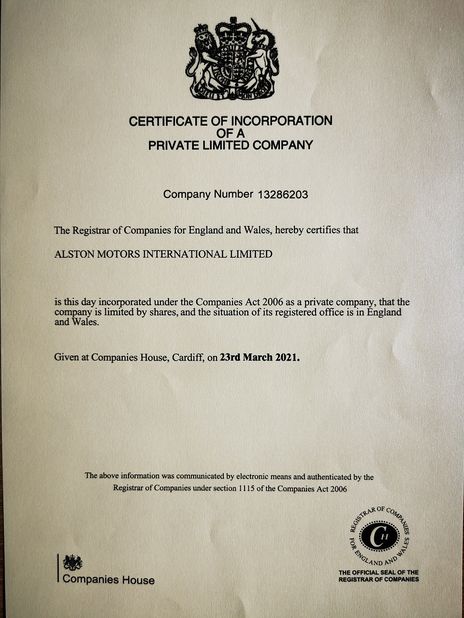
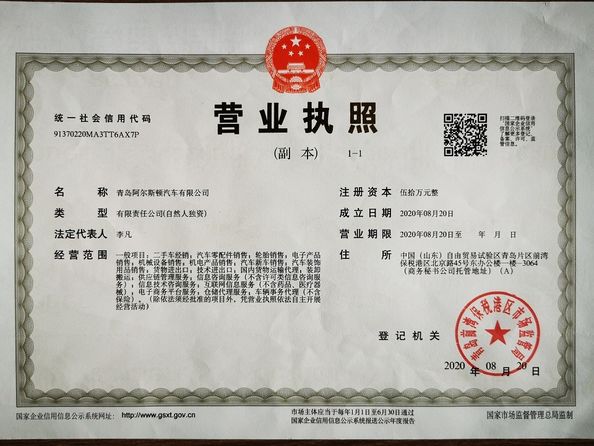
Qingdao Alston Motors recommends sizing the body from verified aggregate density and allowable cargo weight before choosing the axle layout or hydraulic package. For a 40-tonne gravel target at 1.8 t/m³, roughly 22.2 CBM is required; a properly rated 25 CBM body is a sensible starting point, subject to final structural and road-limit checks. See the Alston Motors company profile or request a dump trailer quotation with cargo density, tractor details, and destination.
Frequently Asked Questions
1. How Many Tonnes of Gravel Fit into 30 CBM?
At 1.8 t/m³, the theoretical load is 54 tonnes; permissible cargo may be lower.
2. Does a 40 CBM Body Carry 40 Tonnes?
CBM measures volume, not permissible mass. Forty tonnes of gravel at 1.8 t/m³ occupies about 22.2 CBM.
3. Does Wet Sand Always Have the Same Density?
No. Moisture, particle grading, and compaction affect bulk density; use material-specific measurements.
4. Is a 4-Axle Trailer Always Allowed to Carry More?
No. The tractor, trailer, axle-group ratings, and road laws govern the permissible load.
5. Is a U-Shaped Box Measured Like a Rectangular One?
No. Use the body’s actual cross-section and internal length to determine volume.
6. Can a Weighbridge Ticket Prove Safe Axle Loads?
A gross-weight ticket alone cannot. Obtain axle or axle-group measurements and verify the combination configuration.
7. Which Figure Should Determine the Purchase First?
Establish legal and rated payload, then calculate the body volume using actual cargo density.
Written by: Bruce Li, Export Consultant
Reviewed by: Alston Motors Export & Technical Team
Company: Qingdao Alston Motors Co., Ltd

 ¡Su mensaje debe tener entre 20 y 3.000 caracteres!
 Spanish